Hard Shell vs Soft Shell Luggage: Which One Actually Makes More Sense?
If you search for luggage advice long enough, you’ll run into the same debate again and again: hard shell vs soft shell luggage. One side says hard-sided cases look cleaner, protect better, and feel more premium. The other side says soft-sided suitcases are more practical, more forgiving, and often easier to live with. The truth is that both sides are right — just not in every situation.
That is why this debate matters so much. Travelers are not really asking which option is more fashionable. They are asking which type of bag gives them fewer problems in real travel: at check-in, at the gate, in the overhead bin, on the tarmac, on the baggage belt, in a cramped hotel room, and after a few rough trips. The Reddit discussions you shared make that very clear. People repeatedly come back to the same concerns: cracking, tearing, wheel damage, zipper quality, water exposure, clamshell inconvenience, flexibility, and airline abuse.
So if you’re trying to decide between a hard shell suitcase and a soft shell suitcase, the best answer is not “hard is better” or “soft is better.” The best answer is: choose the one that matches how you actually travel.

Why this choice matters more than it seems
Luggage is one of those purchases where surface-level impressions are misleading. A case can look sleek online and still become annoying in use. A bag can seem plain and still turn out to be the best travel companion you own. That gap between product-page beauty and real-world usefulness is exactly why travelers have such strong opinions.
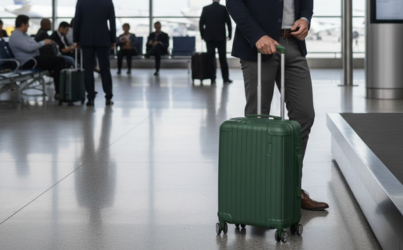
For international travel especially, your luggage isn’t just being carried from home to hotel. It gets rolled, lifted, shoved, stacked, dragged, gate-checked, squeezed into compartments, or handled by multiple airport systems. On top of that, carry-on rules themselves vary by airline, aircraft, and cabin, and IATA notes that while many airlines use a general carry-on reference around 56 × 45 × 25 cm, actual allowances can differ and may include stricter size or weight limits. That means the “best luggage material for travel” is not just about protection — it is also about fit, flexibility, and how much stress the bag absorbs over time.
What hard shell luggage does better

There are real reasons why hard shell luggage has become so popular. One of the clearest benefits travelers mention is protection against wet conditions. In one of the threads, several people pointed out that hard-sided luggage performs better when bags sit in heavy rain on a tarmac or are exposed to wet conditions during handling. Another traveler described retrieving a completely soaked soft case and finding books and belongings ruined, arguing that a hard shell would have prevented that situation.
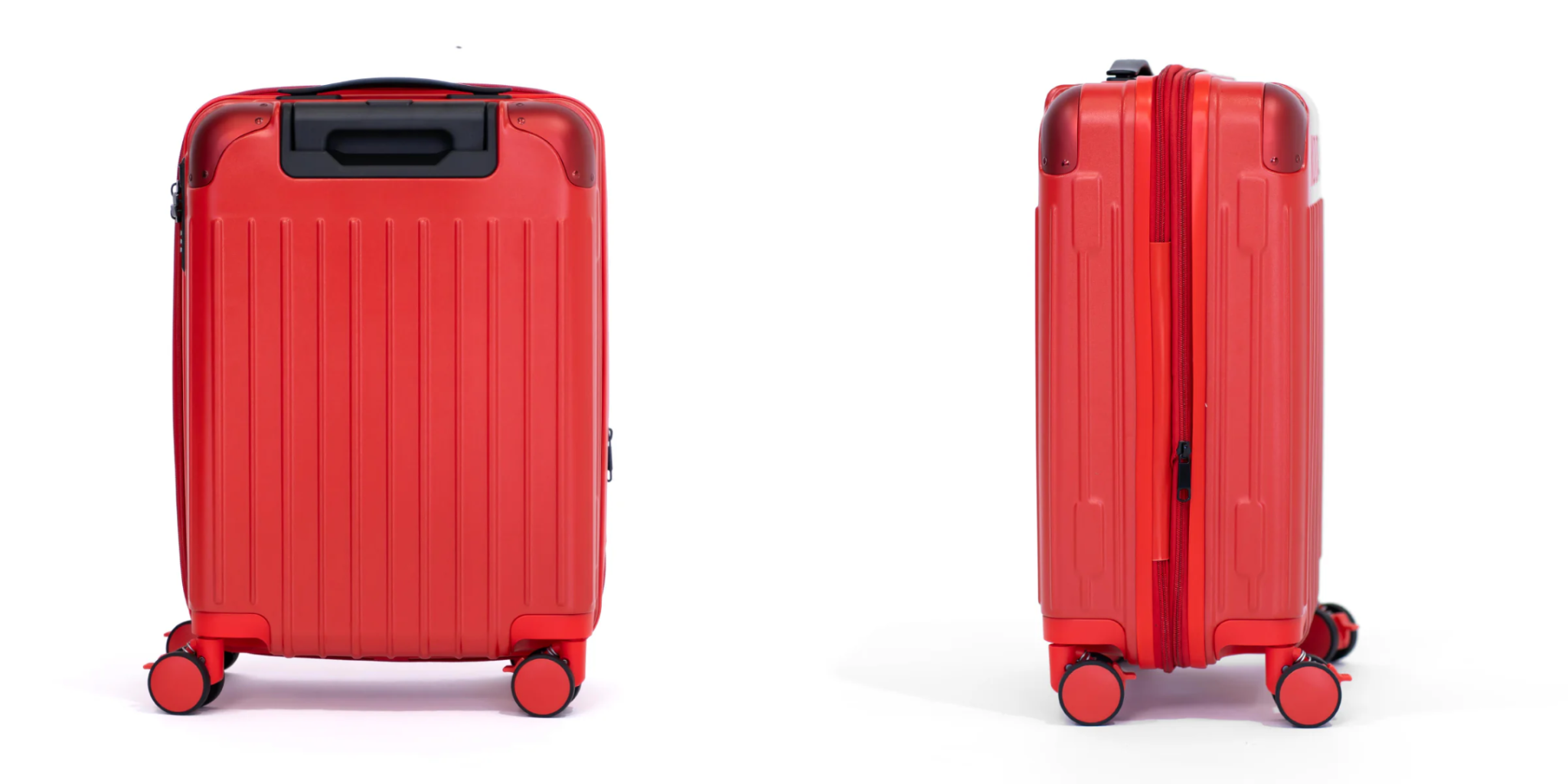
That is a genuine advantage. A hard shell carry-on or hard shell checked suitcase can give you more peace of mind when you’re worried about moisture, spills, or messy baggage conditions. It also provides a more structured shape, which some travelers prefer because it keeps packing neat and the bag looking polished. If your style of travel is tidy, organized, and you like a suitcase that holds its shape, hard shell luggage can feel satisfying in a way that fabric luggage sometimes doesn’t.
There is also the perception of premium quality. Many people naturally associate a smooth, structured shell with a higher-end product. And to be fair, some premium hard cases do look elegant, modern, and refined. If appearance matters to you — and for many travelers it does — a hard shell suitcase can absolutely feel more elevated.
Where hard shell luggage gets frustrating

Now comes the part many glossy comparisons skip: hard shell luggage can also be surprisingly annoying.
The biggest issue raised across your Reddit set was cracking and damage under rough handling. In the thread about whether airlines destroy hard-case luggage often, travelers described cracked corners, broken wheels, dented shells, shells that lasted only a handful of trips, and hard cases that were damaged badly enough to need replacement. One airline employee said belt systems often do more damage than handlers themselves, and described broken wheels and structural weakening from bags being stacked under heavy load. Another commenter said their hard cases lasted only about a year and a half with monthly travel before cracking.
That doesn’t mean every hard case is bad. It means that hard shell luggage cracking is not a rare internet myth. It is a recurring real-world complaint, especially with checked luggage and repeated rough handling. A particularly useful insight from the thread was that some plastics can become more brittle over time, especially if the bag isn’t packed well enough to support its structure. In other words, a rigid case is only as strong as its material quality and overall design.
Then there is the issue of usability. Many travelers in the “what’s so great about hard-sided luggage?” discussion complained about the clamshell opening. That style can be elegant on paper, but in real life it often means the suitcase opens like a book and takes up more floor space. People who like to live out of their suitcase, use hotel luggage racks, or access their things frequently found that hard shell bags became awkward in smaller rooms. One comment put it simply: soft-sided luggage takes up less floor space and is easier if you need constant access. Others specifically said they disliked hard-shell bags because they cannot sit neatly on luggage racks the same way soft-sided bags do.
This is one of the most overlooked parts of the hard shell vs soft shell suitcase debate. A suitcase is not just for transit. You also have to live with it once you arrive.
What soft shell luggage does better

Soft-sided luggage remains popular for good reasons. The first is flexibility. Soft shell bags tend to be more forgiving when you’re packing awkward items, squeezing into overhead bins, or dealing with tight spaces. For travelers who slightly overpack, want outside pockets, or value quick access, this flexibility is a serious advantage.
The Reddit threads showed that many long-time travelers still strongly prefer soft shell luggage for international travel because it works better in real-world scenarios. Some people liked being able to use exterior pockets. Others liked that soft-sided luggage works more naturally on luggage racks and is easier to access in hotel rooms. One user even mentioned using soft-sided luggage almost like a drawer. That may sound small, but for repeated travel, those everyday conveniences matter a lot.
There is also a durability argument in favor of soft-sided cases — but it is not as simple as “soft always lasts longer.” What the baggage-handler thread suggests is more precise: better quality fabric with a sturdy internal skeleton may hold up better than cheap hard plastics. The baggage handler specifically said higher-quality fabric luggage can outperform hard plastic luggage in real checking conditions, and warned that poor-quality hard plastic often ends up broken somewhere along the way.
That’s an important distinction. Soft shell luggage is not automatically superior. Cheap soft luggage can still tear, bulge, or fail. But good soft-sided construction can be impressively resilient because it bends instead of cracking.
Where soft shell luggage can fail
Soft shell luggage has its own weaknesses, and they are worth taking seriously.
The biggest one is zipper and fabric failure. The baggage-handler thread was especially blunt on this point: cheap zippers are a disaster waiting to happen, especially on overstuffed bags. The commenter described overpacked bags with weak zippers bursting open and spilling belongings during handling, and warned against packing bulky items in front zipper pockets because they can catch and rip.
That means if you choose a soft shell suitcase, you should care deeply about zipper quality and not just the fabric. Many shoppers focus on shell type and forget that luggage often fails at the zipper, seams, pocket construction, or wheel housing first. In practice, a soft bag with strong zippers and disciplined packing can be more dependable than a brittle hard case. But a soft bag with cheap hardware can become a nightmare.
Water resistance is the other common concern. Hard shell bags generally have an edge when exposed to prolonged wet handling or rain on the tarmac. Some fabrics and treatments can help, of course, and some commenters pointed that out, but the general pattern in the discussion still favored hard shell for wet-condition peace of mind.
So if your priority is maximum weather resistance and you often check luggage in unpredictable conditions, hard shell still has a valid argument.
Checked luggage changes the equation
One of the biggest mistakes people make is treating this debate as if carry-on and checked luggage are the same problem. They’re not.

For checked luggage, the harshest realities come into play. Bags are stacked, dragged, pushed through belt systems, and sometimes hit with more weight and impact than travelers realize. In the Reddit threads, airline workers and frequent flyers repeatedly described wheels coming off, shells cracking, and structural wear building up over repeated flights. That kind of use punishes luggage differently than overhead-bin use does.
This is why some experienced travelers still prefer soft-sided checked bags: they are more willing to flex and absorb stress. But at the same time, poor-quality soft bags can tear, unzip, or blow out if overloaded. So for checked baggage, the smarter question is not just hard shell vs soft shell luggage. It is: which build quality survives repeated abuse better?
The baggage-handler advice is useful here because it shifts the focus away from shell type alone and toward overall construction: strong fabric, sturdy skeleton, durable wheels, and reliable zippers. That is a far more mature way to think about luggage.
Carry-on travel changes it again
For carry-on luggage, the conversation changes. Now you care more about overhead-bin fit, gate-check risk, maneuverability, and convenience during the trip.
One of the Reddit threads you shared, while not entirely about shell type, highlighted a real travel anxiety: the fear that overhead space will run out and a bag will be forced into gate check. Travelers described the stress of not finding bin space and the frustration of oversized carry-ons causing aisle chaos. That matters here because rigid luggage can be less forgiving when space is tight, whereas some soft-sided bags offer more flexibility in crowded bins or smaller aircraft.
At the same time, many people like hard-shell carry-ons precisely because they feel compact, neat, and structured. So if you mostly travel with a carry-on, especially on predictable routes and with well-managed packing, a hard case may serve you beautifully. But if you value adaptability, outside access, and easier living out of the bag, soft shell may still make more sense.
The real deciding factors are not just the shell
If you take only one thing from this article, let it be this: luggage durability depends on more than the shell.
Across all the threads, the most practical travelers kept circling back to the same points:
-
wheel quality
-
zipper quality
-
handle stability
-
how the bag is packed
-
whether the structure is well supported
-
whether the materials are cheap or genuinely robust
The airline employee in the hard-case damage thread pointed out that wheels are a common failure point and that heavy stacking weakens structure over time. The baggage-handler thread emphasized that bad zippers and poor fabric construction are major causes of disaster. These are not glamorous details, but they are the ones that decide whether a suitcase becomes a reliable companion or an expensive irritation.
So if you are shopping for the best luggage material for travel, don’t obsess only over “hard vs soft.” Ask better questions:
-
Are the wheels solid?
-
Does the handle feel stable?
-
Are the zippers trustworthy?
-
Does the opening style fit how I travel?
-
Will this bag be checked often or mostly carried on?
-
Do I want flexibility or structure?
Those questions will get you closer to the right answer than shell type alone ever will.
Which one makes more sense for you
Choose hard shell luggage if you want:
-
better protection from wet conditions
-
a more structured and polished look
-
a bag that keeps its shape cleanly
-
a carry-on that feels sleek and modern
-
a suitcase you mostly pack neatly and use in predictable travel conditions
Choose soft shell luggage if you want:
-
more flexibility while packing
-
easier access during the trip
-
outside pockets
-
easier use on luggage racks and in small hotel rooms
-
a bag that may absorb stress better instead of cracking
If you check your luggage often, pay extra attention to overall construction quality rather than assuming a rigid shell means greater durability. If you mostly carry on, think about overhead-bin flexibility and how you like to access your things during a trip. And if you travel long enough or often enough, stop thinking in terms of “which type is cooler” and start thinking in terms of which type creates less friction for my style of travel.
Final verdict
So, hard shell vs soft shell luggage: which one actually makes more sense?
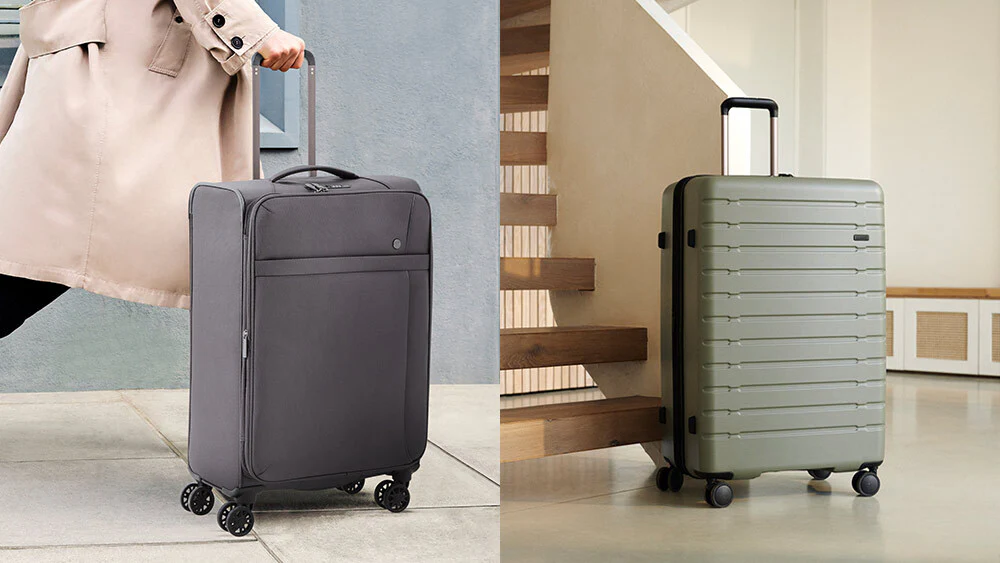
For many travelers, the honest answer is: soft shell is more practical, hard shell is more polished. But that is still too simple.
Hard shell luggage makes more sense if you care about structure, weather resistance, and a premium look — and if you are willing to accept the possibility of cracking or clamshell inconvenience, especially with checked bags. Soft shell luggage makes more sense if you care about flexibility, usability, easier access, and day-to-day convenience — provided the build quality is strong enough that the zippers and fabric won’t let you down.
In other words, the best suitcase is not the one that wins the trend cycle. It is the one that works for the way you travel.